It’s the kind of piece you imagine finding at the end of a long wooden table, somewhere just beyond the reach of city noise—where mornings begin with intention, not urgency.
Low and grounded. A quiet, deliberate form.
The body sits with a certain confidence—rounded, steady—like it knows exactly what it’s meant to be. No excess. No distraction. Just purpose. The lid rests neatly on top, crowned with a small, centered knob that invites a simple, practiced gesture: lift, scoop, return.
There’s a softness to the silhouette, but don’t mistake it for fragility. This is a working piece. Meant to be opened a hundred times, passed across the table, incorporated into the rhythm of everyday life.
Turn the lid over and you’ll find the maker’s mark—subtle, almost private. A reminder that this wasn’t stamped out by a machine, but shaped by hands that understand patience.
This isn’t just a sugar bowl.
It’s part of the ritual.
It’s the kind of piece you imagine finding at the end of a long wooden table, somewhere just beyond the reach of city noise—where mornings begin with intention, not urgency.
Low and grounded. A quiet, deliberate form.
The body sits with a certain confidence—rounded, steady—like it knows exactly what it’s meant to be. No excess. No distraction. Just purpose. The lid rests neatly on top, crowned with a small, centered knob that invites a simple, practiced gesture: lift, scoop, return.
There’s a softness to the silhouette, but don’t mistake it for fragility. This is a working piece. Meant to be opened a hundred times, passed across the table, incorporated into the rhythm of everyday life.
Turn the lid over and you’ll find the maker’s mark—subtle, almost private. A reminder that this wasn’t stamped out by a machine, but shaped by hands that understand patience.
This isn’t just a sugar bowl.
It’s part of the ritual.
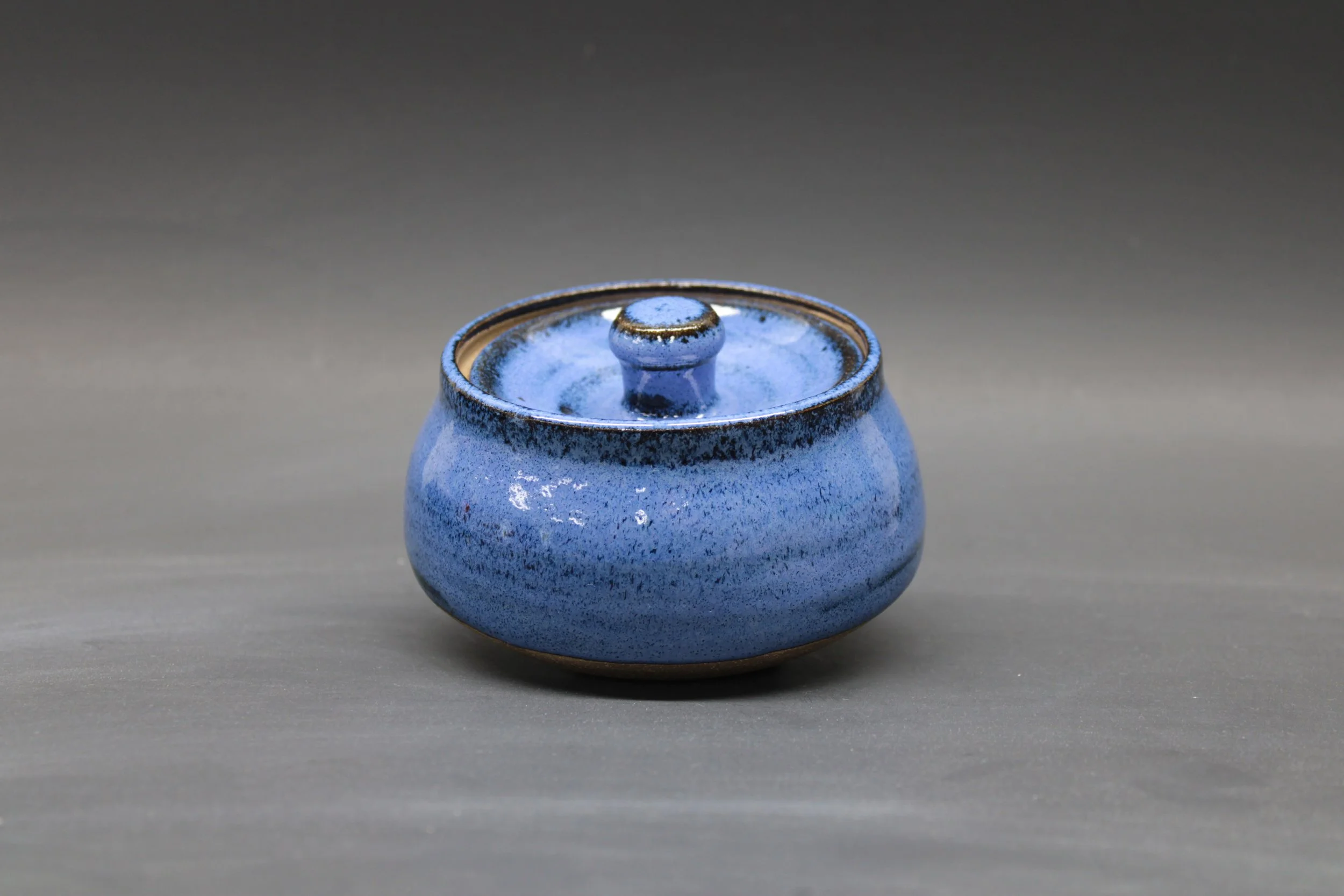 Image 1 of 8
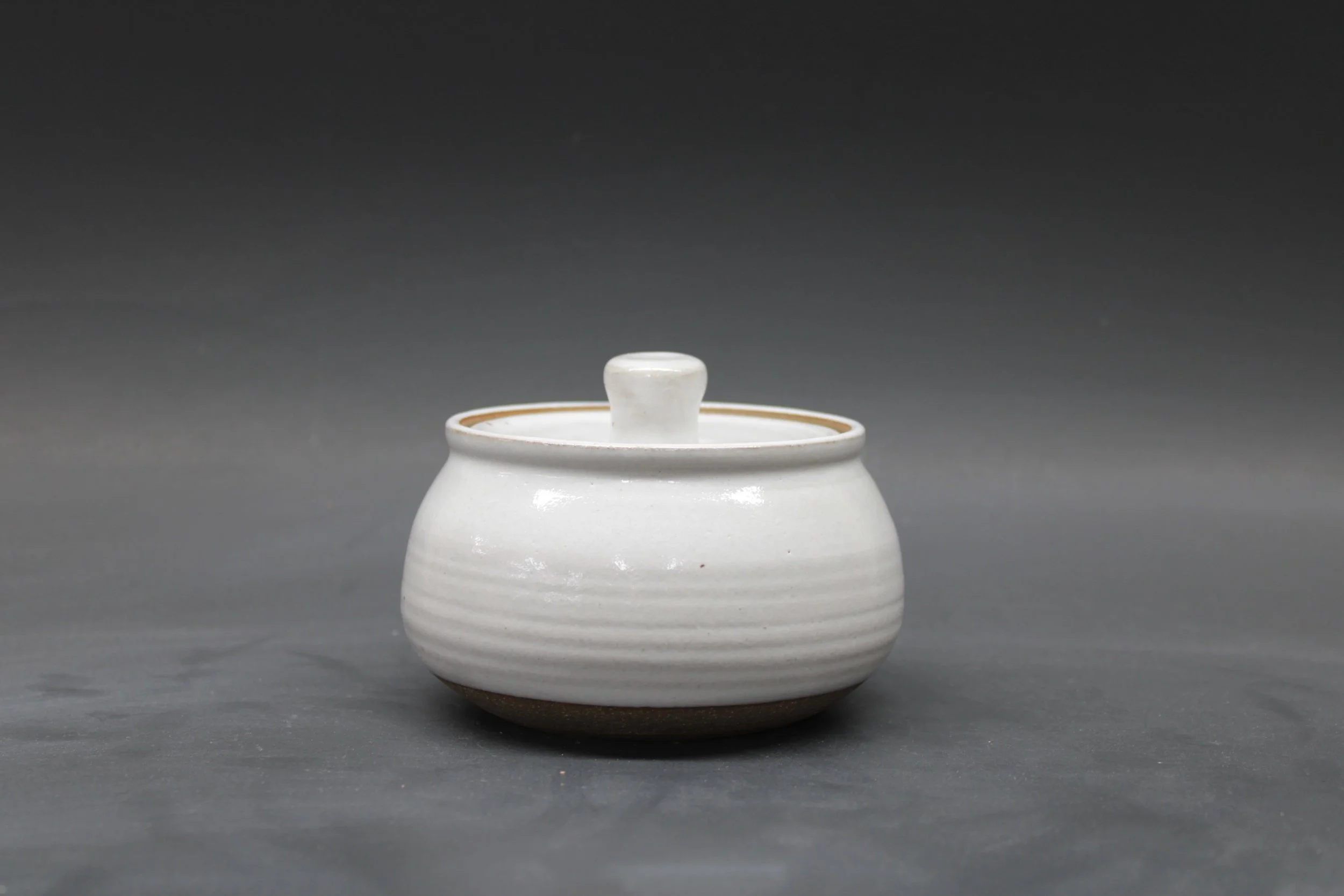 Image 2 of 8
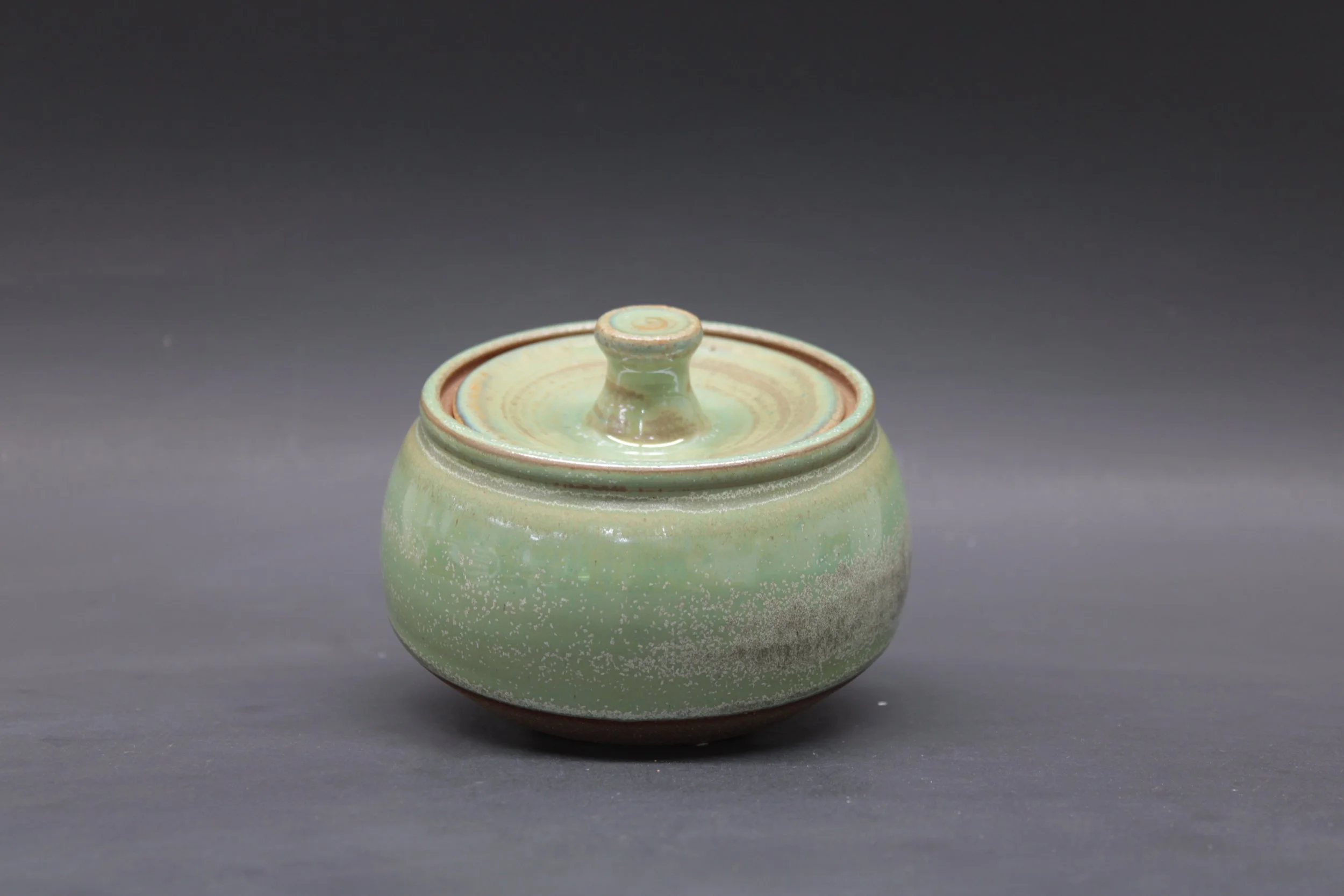 Image 3 of 8
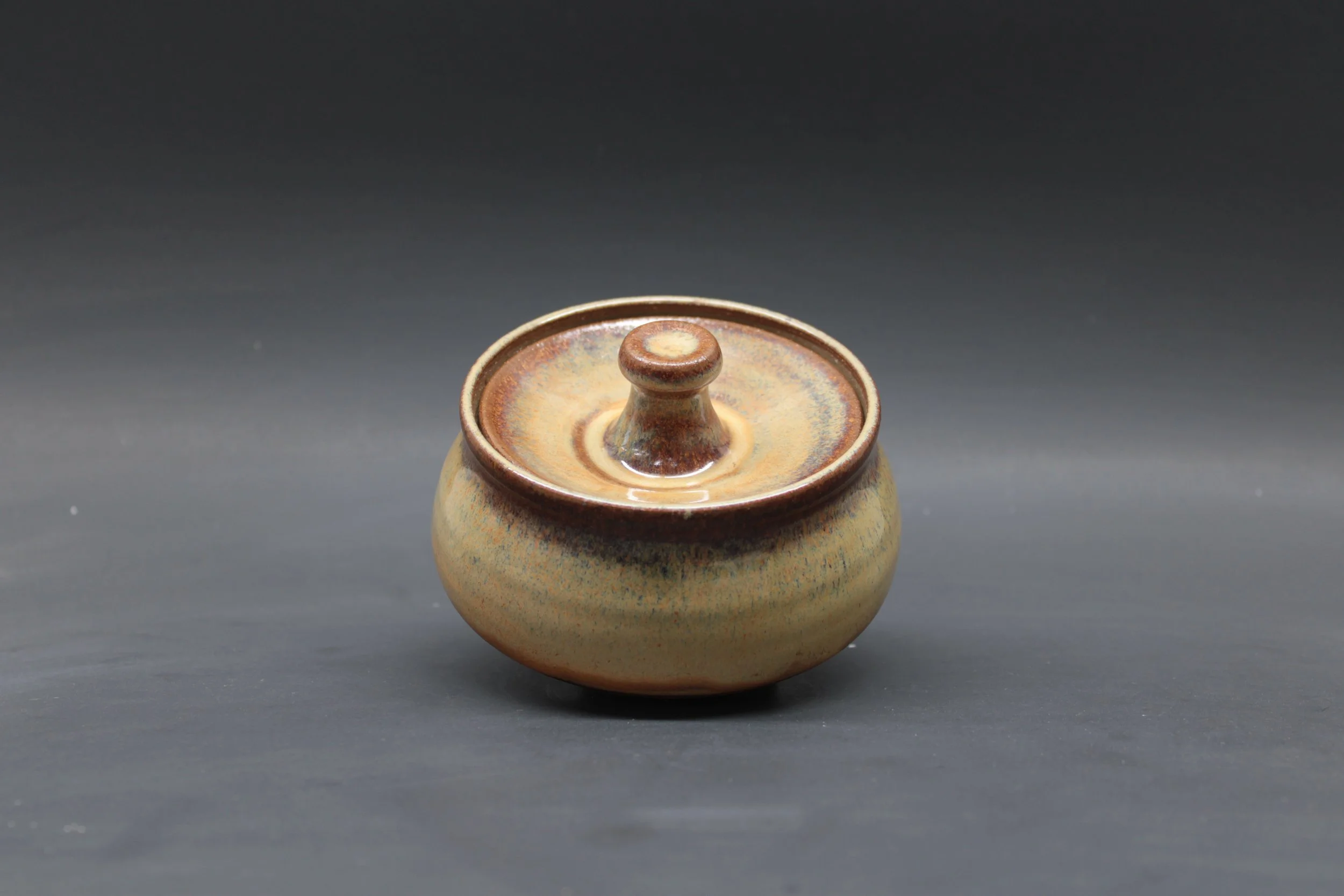 Image 4 of 8
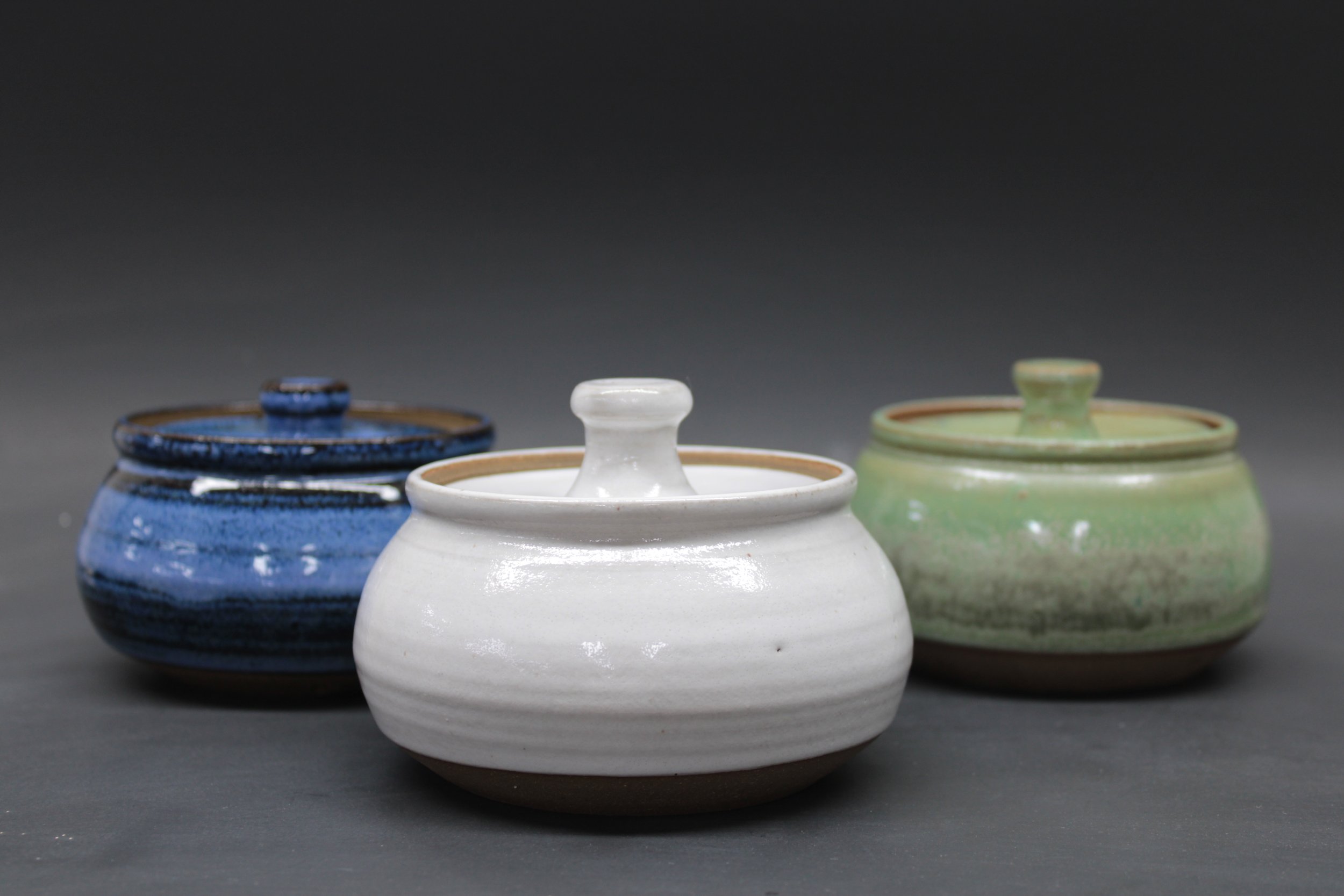 Image 5 of 8
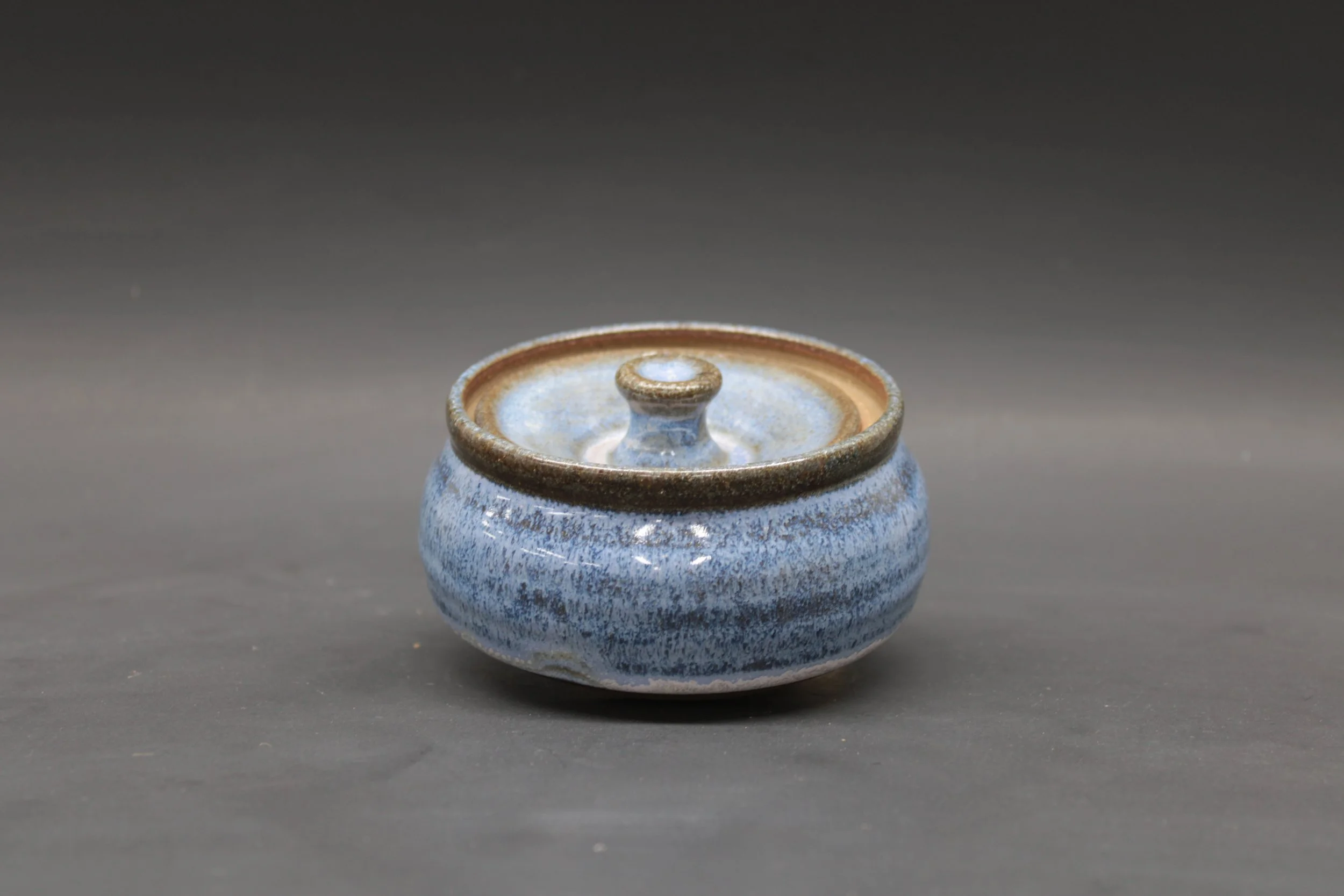 Image 6 of 8
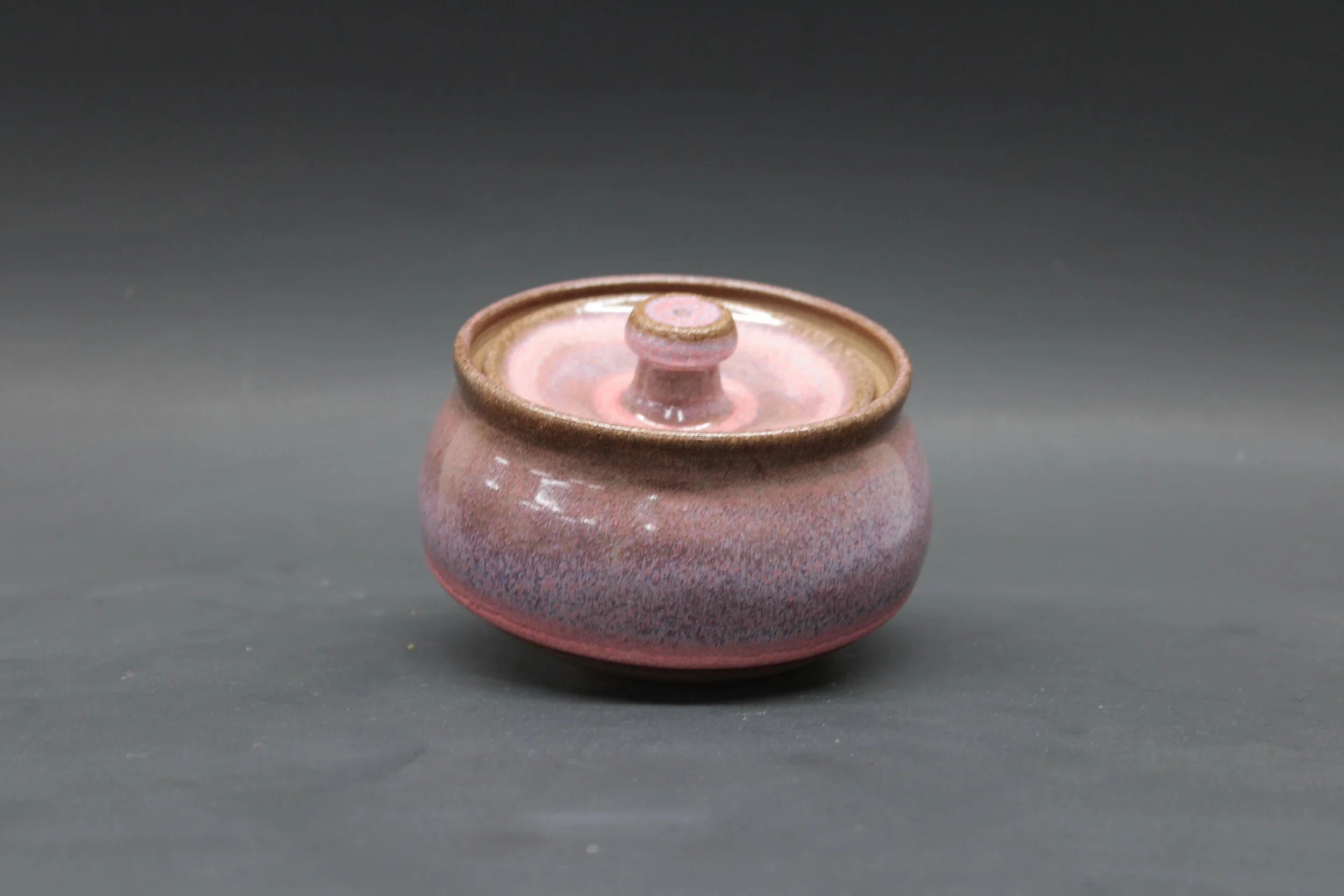 Image 7 of 8
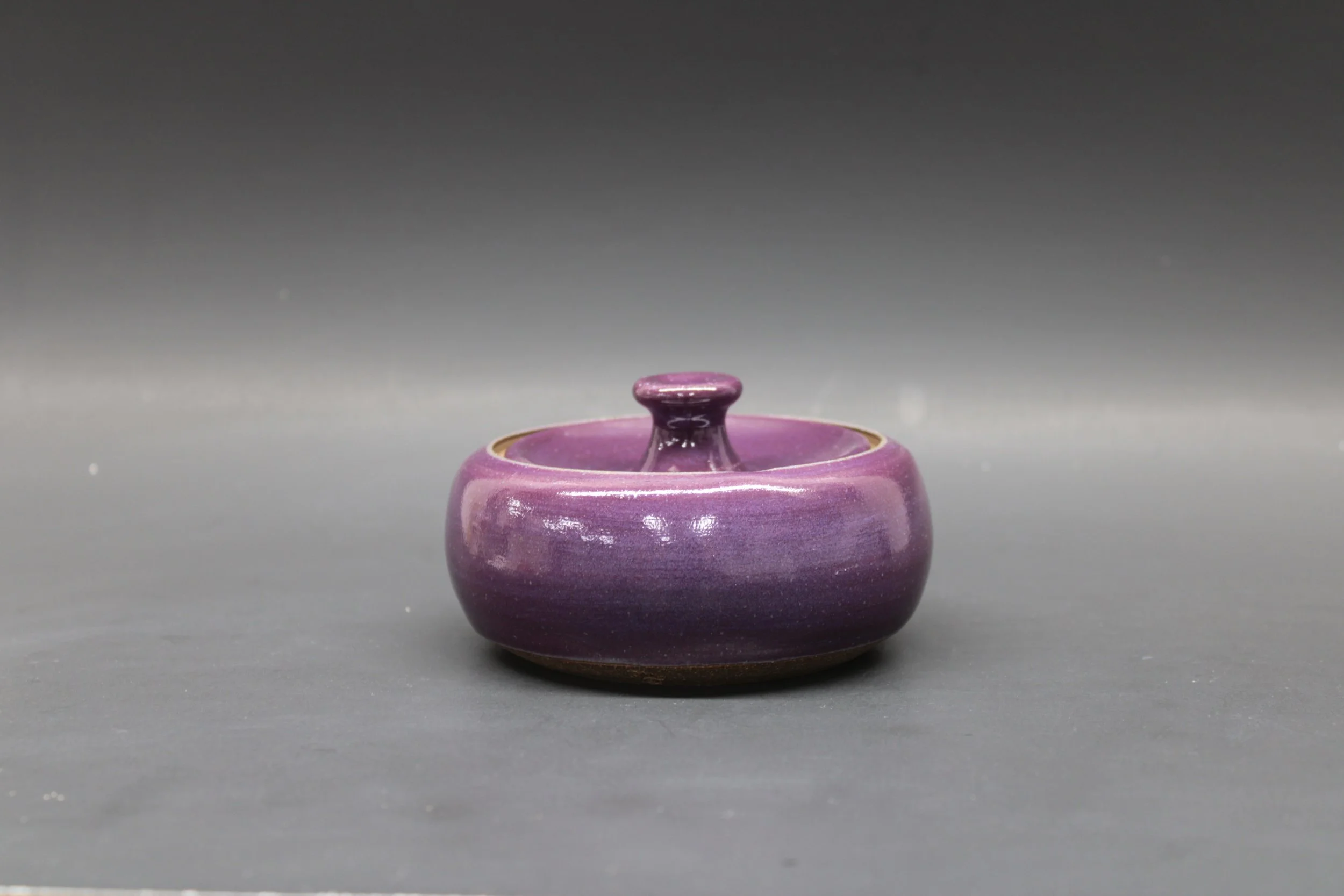 Image 8 of 8